
Surveys and inventories
Review demographic and socioeconomic surveys. Record the location of inventoried structures, land, crops and trees to map them within the area of interest and support project monitoring.
Africa
SIS-PAR supports Community Relations and Environment (RELCOM) teams, resettlement teams and consultancies. Find field records, verify recorded assets and prepare individual case files.
Maize · 0.75 ha · Plot verified within the phase footprint.
Fictional rate schedule · PC-DEMO-02
| Affected area | 0.75 ha |
|---|---|
| Reference yield | 1,000 kg/ha |
| Reference price | XOF 200/kg |
| Compensation period | 2 seasons |
| Estimated compensation | XOF 300,000 |
0.75 × 1,000 × 200 × 2 = XOF 300,000
Agricultural land · 0.60 ha affected · Plot verified within the phase footprint.
Fictional rate schedule · PC-DEMO-03
| Affected area | 0.60 ha |
|---|---|
| Land rate | XOF 1,000,000/ha |
| Estimated compensation | XOF 600,000 |
0.60 × 1,000,000 = XOF 600,000
Mango orchard · 6 trees inventoried · Plot verified within the phase footprint.
Fictional rate schedule · PC-DEMO-04
| Mango trees, 30–59 cm | 4 × XOF 30,000 |
|---|---|
| Mango trees, 60–89 cm | 2 × XOF 50,000 |
| Estimated compensation | XOF 220,000 |
(4 × 30,000) + (2 × 50,000) = XOF 220,000
First documented exchanges on the Bomboré database
SIS_OBSA design and maintenance confirmed
SIS_OBSA maintenance orders and a 2024 invoice
The SIS-PAR workflow
Manage multiple phases of the same project in SIS-PAR. For each phase of the resettlement action plan (RAP), link survey data and inventoried assets to each project-affected person’s case file after validating the locations of the assets in the inventory. This workflow draws on Orezone Bomboré SA (OBSA) in Burkina Faso, where Canadian company Orezone Gold Corporation developed the Bomboré gold project.
Register project stakeholders in SIS-PAR and involve affected people and local communities throughout the RAP, from initial consultations to closure. Agreements and grievance records document how the project responded to concerns and help account for community participation in the project.
Cross-reference the affected land inventory with socioeconomic surveys to find the plots, people and households concerned. RELCOM teams use this information and the RAP criteria to identify the most vulnerable people and provide them with priority support.
When a project-affected person loses all their land, the RELCOM team can identify their case and review their support needs as a priority, based on the RAP criteria.
The inventory of affected trees helps the RELCOM team plan reforestation. If the project calls for planting two trees for every tree lost, the inventory provides the count needed to calculate how many seedlings to plant.
The team can use the inventory to prepare monitoring of plots slated for restoration and completed planting.
Review demographic and socioeconomic surveys. Record the location of inventoried structures, land, crops and trees to map them within the area of interest and support project monitoring.
Select the project, phase and compensation type, then find the affected person. Check whether inventoried assets fall within the phase footprint. The authorised team reviews eligibility against the approved RAP, recognised rights or uses, and documented losses.
Use case summaries and Excel exports to prepare compensation negotiations with affected people and local communities. Record community agreements in the framework agreement. Formalise individual agreements and generate acknowledgements.
Record complaints and concerns raised by stakeholders, generate an acknowledgement of receipt and track each case through to closure. Identify upcoming or overdue deadlines and map geolocated grievances. Email or SMS reminders depend on the integration and settings agreed for the project.
At Bomboré, SIS-PAR covers the Kagtanga artisanal gold mining site as part of the resettlement action plan (RAP). Artisanal gold mining sites follow the same workflow as ‘Marché’ projects, such as ‘Marché BV2’, from surveys and inventories to case review, agreements and compensation sessions.
For the project, negotiations with the affected communities, overseen by government representatives, lead to a framework agreement. It records the agreed compensation rates and terms in line with applicable national law and the resettlement action plan (RAP).
Once the framework agreement is approved, enter the rates adopted for the phase. The case file should identify their source, version and approval. Use those rates to assess losses and prepare summaries, individual agreements and compensation sessions. Where the project standard requires it, the valuation of assets accounts for full replacement cost.
Organise sessions by project, RAP phase and compensation category. Depending on the project, a session can cover dwellings and ancillary structures, crop losses, loss of land and trees, or business activities.
Prepare the list of people concerned and the documents required for the session, such as summary sheets, compensation agreements and release forms. When a person falls into several categories, track each compensation item in the corresponding session.
The filing plan organises digitised records and sets out access rights and retention periods in line with the standards applicable to the project.
Project reference · Burkina Faso
S2I’s experience with the Bomboré gold project’s socioeconomic database and compensation files informed the development of SIS-PAR.
Hado Paul Ouédraogo set up the module and helped monitor the construction of resettlement housing alongside the project architect.
The monitoring reports shared by Orezone on 14 February 2020 show progress by contract, contractor, resettlement site and housing type.
Timeline based on correspondence from 2013 and 2014, the August 2017 letters, the service agreement signed in 2018, the certificate dated 29 May 2023, purchase orders and the 2024 maintenance invoice. Supporting records are available on request, subject to the agreed disclosure terms.
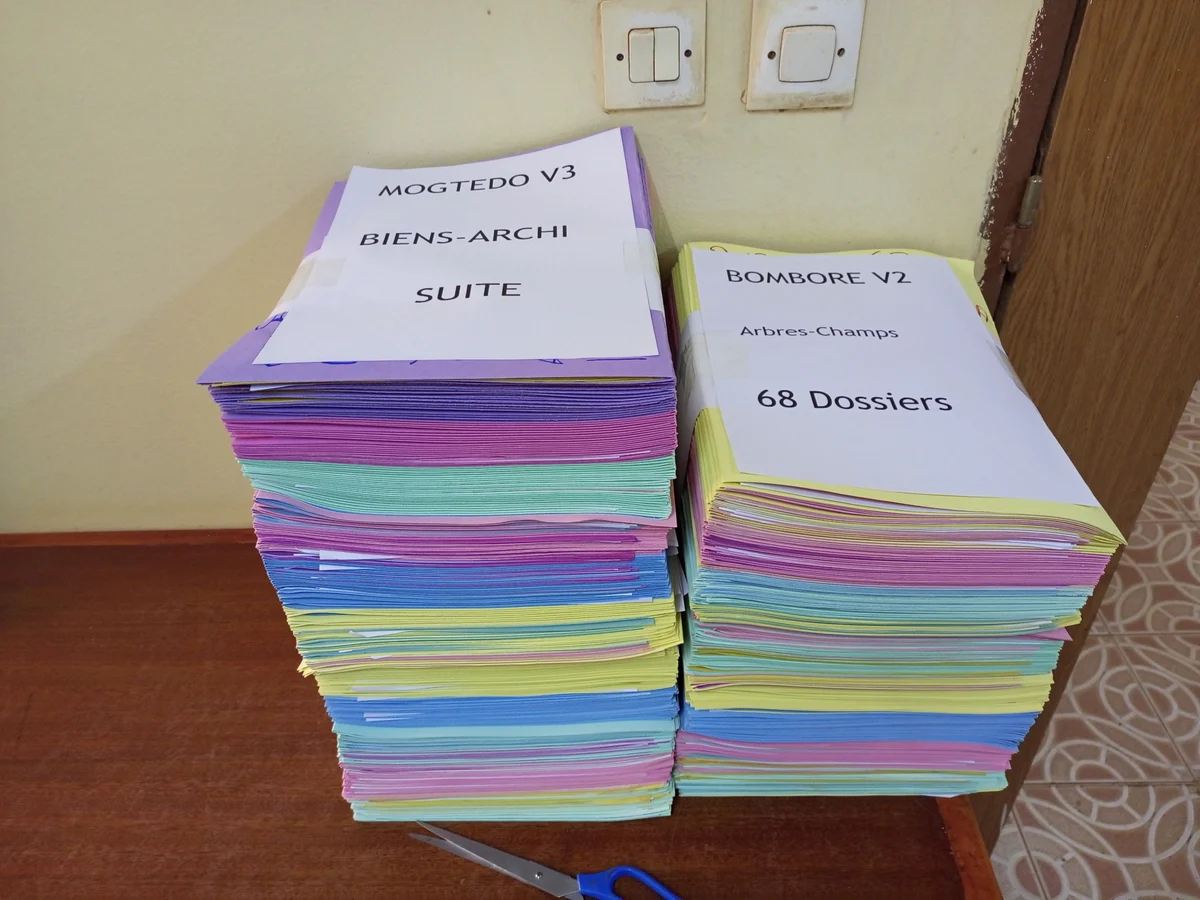
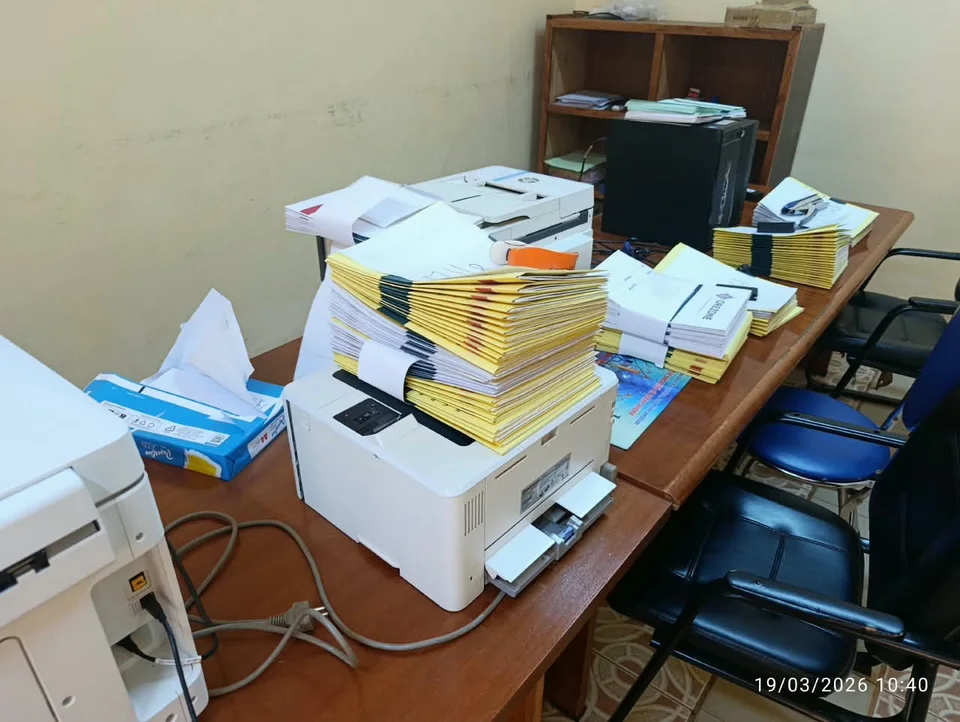
Orezone Bomboré · 2023
S2I designed and commissioned OBSA Enviro Data Warehouse for Orezone Bomboré’s Environment Department. This project, separate from the RAP workflow, consolidates environmental monitoring data from multiple sources.
The database was installed on a dedicated server and user workstations were configured. On-site training included loading data as part of the team’s day-to-day work.
Tell us about your project
In 15 minutes, follow a fictional case from the geolocated inventory to the summary and agreement. Tell us your country, project phase and the compensation type you would like to see.
Quotes depend on the project phases, modules and support required.